
Addy's Story
Our journey with Addy has been shaped by uncertainty, perseverance, and an unwavering belief in her. Early on, we noticed she was not meeting developmental milestones, which led us to enroll her in early intervention services while we searched for answers. What followed were months of specialist appointments, multiple rounds of testing, and MRIs that raised more questions than clarity. We knew something was different, but we did not yet know why.
It was not until advanced genetic testing that we finally received a diagnosis. Addy was diagnosed with GNAO1, an ultra-rare genetic neurological disorder with fewer than 350 known cases worldwide. She is one of only 18 children in the world identified with her specific variant (c.736 G>A). While the diagnosis brought long-awaited clarity, it also introduced a future filled with unknowns. It marked the beginning of a new chapter centered on learning, advocacy, and hope.
Addy’s primary symptoms are hypotonia and chorea, which are commonly associated with GNAO1. Hypotonia, or low muscle tone, affects her strength, posture, and motor development, making everyday movements more difficult. She also experiences chorea, which causes involuntary and unpredictable movements due to irregular signals from the brain to the body.
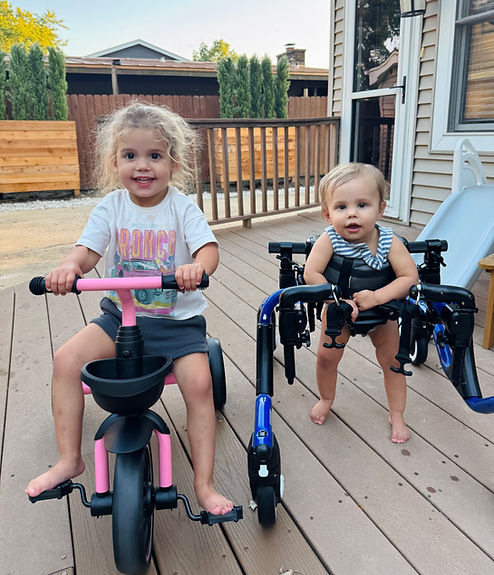
Because of her condition, Addy may be non-verbal and is currently unable to sit independently, and as she grows, she will likely need mobility support. GNAO1 is considered a progressive neurological condition, meaning symptoms can change over time and there is no clear way to predict how the disorder will evolve.
To support her development, Addy participates in occupational therapy, physical therapy, developmental therapy, and speech & feeding therapy multiple times each week. These therapies focus on building strength, improving movement, supporting communication, and helping Addy reach her fullest potential.
While we do not know exactly what the future holds for Addy, we are inspired by her resilience and determination every day. Though these challenges shape our lives and require ongoing care and flexibility, they are met with love, and the joy Addy brings to each moment.
We remain committed to advocating for her, supporting her needs, and sharing our journey to raise awareness, advance research, and help other families facing rare diagnoses feel less alone. While this journey has often felt lonely, and still does, we are driven by a love that would do anything for Addy, because everything we do, we do All for Addy.




Ways to Support
The Bow Foundation is the leading organization for GNAO1 research and family support, making it the most impactful place to donate to advance treatments, awareness, and hope for affected children.
The Olivia Joan Foundation was founded by a member of the GNAO1 community who has become a close friend and an invaluable source of support for our family. Through research funding, scholarships, and awareness efforts, the foundation continues to uplift families navigating this rare diagnosis.
What is GNAO1?

GNAO1 is an ultra-rare genetic neurological disorder caused by a mutation in the GNAO1 gene, which plays an important role in how the brain sends signals throughout the body. This condition primarily affects the nervous system and can impact movement, muscle tone, development, and communication. Children with GNAO1 may experience symptoms such as involuntary movements, low muscle tone, developmental delays, and seizures, though the presentation and severity can vary widely from person to person. Because GNAO1 is so rare, with fewer than 350 known cases worldwide, there is still much to learn about how the disorder progresses and how best to treat it. Ongoing research and awareness are essential to improving understanding, care, and outcomes for individuals and families living with GNAO1.

